
As Türkiye enters a new period aimed at coordinating zoning and licensing procedures for wind and solar energy projects more effectively, battery technologies worldwide are moving beyond lithium-ion. Solar energy systems are also preparing to expand beyond conventional rooftops and land-based installations into windows, façades and building materials.
Growth in the electric vehicle market is creating a new investment ecosystem extending from charging stations and energy storage to distribution grids and energy management software. Thermal batteries designed to supply industrial process heat through electricity are further broadening the scope of electrification.
All these developments point to the same conclusion: the next phase of the energy transition is not simply about installing additional generation capacity. Integrated solutions that accelerate investment processes, provide greater flexibility to the grid and enable energy to be used more efficiently across different times and sectors are becoming increasingly important.

Zoning and Licensing Processes for Renewable Energy Investments Are Being Reshaped
A new regulation has been published in Türkiye to enable more coordinated management of zoning plans, land subdivision plans, construction permits, occupancy permits, and business opening and operating licences for wind and solar energy projects holding a preliminary licence or electricity generation licence.
The regulation dated 24 July 2026 establishes the implementation framework under which these procedures will be managed by the Ministry of Energy and Natural Resources. The date on which applications will begin to be accepted, together with the required information and documentation, is expected to be announced separately. Therefore, the regulation’s actual impact on investment schedules will become clearer once the implementation process begins.
Zoning and licensing procedures for renewable energy projects often involve multiple public institutions and local authorities, which can extend project development periods and increase financing costs. The new approach is intended to support a more coordinated transition, particularly between the planning and construction stages.
The regulation is also significant because it was introduced during the announcement period for Türkiye’s 2026 Renewable Energy Resource Area tenders. Under the YEKA GES-2026 programme, a total solar connection capacity of 900 MWe was offered through 14 tenders. Under the YEKA RES-2026 programme, a total wind connection capacity of 1,500 MWe was offered through seven tenders. This means that a combined capacity of 2,400 MWe is planned to be allocated to investors.
Accelerating zoning and licensing procedures could help convert allocated capacity into completed investments and electricity generation within a shorter period. However, the success of investment processes depends on more than administrative approvals alone. Grid connection, land acquisition, equipment supply, financing, domestic manufacturing capacity and project development schedules must also be managed simultaneously.
Successful renewable energy policies in the new period are therefore expected to address capacity allocation, zoning and licensing, grid planning and industrial policy in an integrated manner.
Solar Energy Is Becoming an Architectural Component of Buildings
Could windows of the future simultaneously transmit daylight and generate electricity?
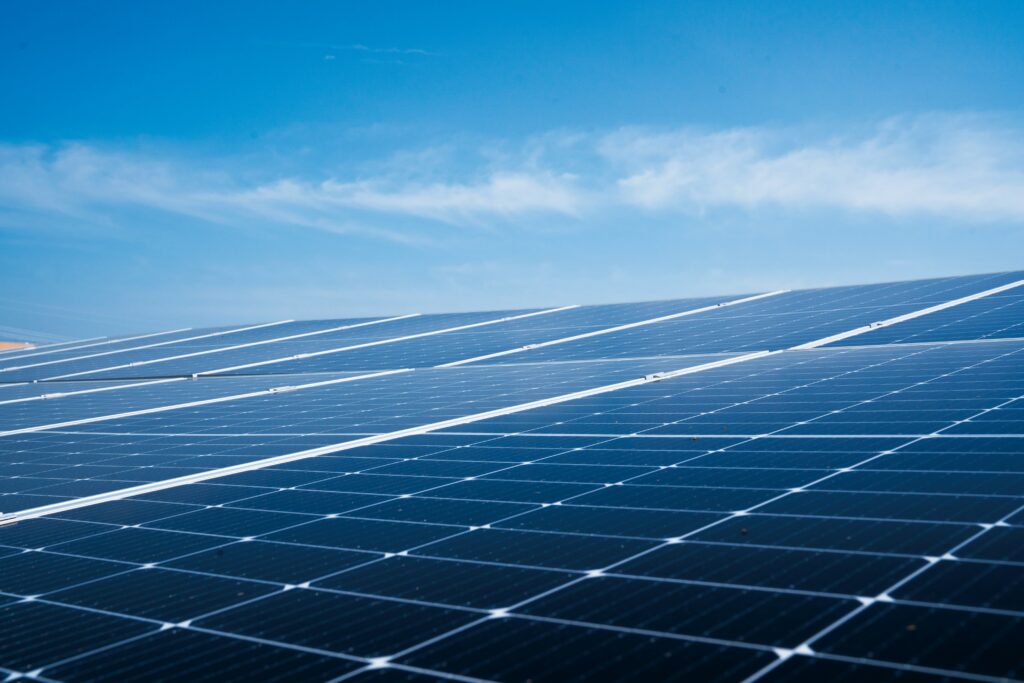
Developments in photovoltaic technologies are expanding the use of solar energy beyond conventional rooftop and ground-mounted applications. Research into semi-transparent solar cells aims to enable windows, glass façades and other transparent building surfaces to generate electricity.
Semi-transparent perovskite solar cells developed under the leadership of University College London point to new applications capable of generating electricity from both sunlight and indoor lighting. A 30-by-30-centimetre panel was developed as part of the research, while the long-term objective is to make the technology as easy to apply as window film. However, the study remains at the research and scale-up stage.
In perovskite solar technologies, energy conversion efficiency is no longer the only determining factor. Material durability and suitability for mass production are also becoming increasingly important. US-based advanced materials developer Sofab Inks secured an investment of USD 6 million to expand its work on improving the durability and scalability of electron transport layers used in perovskite solar cells. This development demonstrates the importance of materials engineering in moving perovskite technologies from laboratory-scale research towards commercial manufacturing.
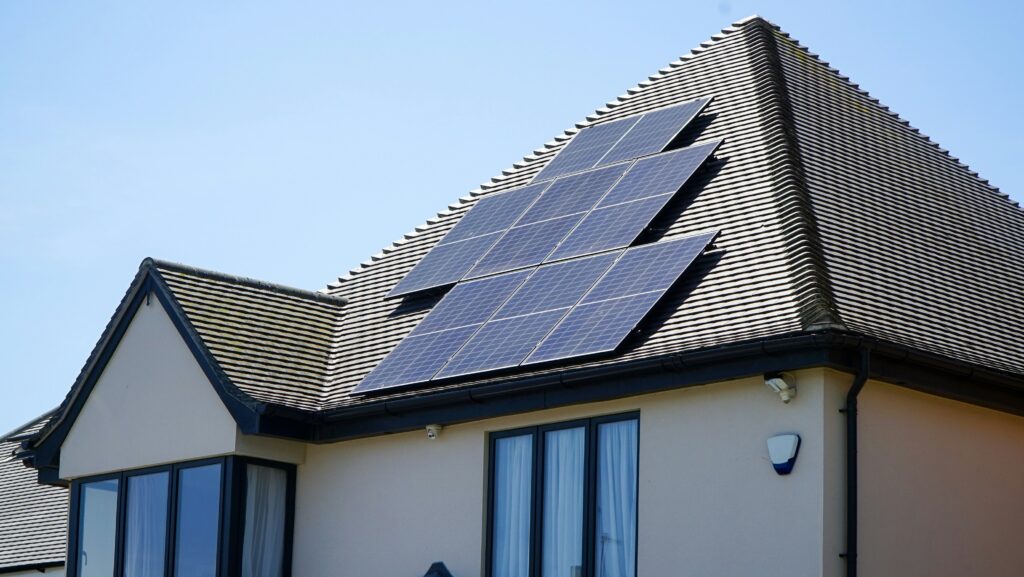
The architectural appearance of solar panels is also changing. The ShadeCut approach developed by Fraunhofer ISE aims to make photovoltaic modules visually compatible with roof tiles, bricks and other building surfaces through the use of coloured films and transparent sections.
The technology could make building-integrated photovoltaic systems easier to use, particularly in historic buildings or areas subject to aesthetic restrictions. Fraunhofer ISE states that power losses in applications using spectral colours can be limited to approximately 5%.
These developments indicate that building-integrated photovoltaic systems could become a more important component of energy efficiency and distributed energy generation policies in the coming period. Façades, windows, roofs and building materials could simultaneously perform both architectural and electricity generation functions.
For Türkiye, this field could create new cooperation opportunities for glass manufacturers, façade system companies, building material producers, architecture firms, inverter manufacturers, electrical equipment companies and energy management businesses.
Cost, Scale and Battery Chemistry Are Changing in Energy Storage
Energy storage systems are moving beyond their role as a complementary element of renewable energy generation and becoming a fundamental component of electricity infrastructure.
The variable nature of solar and wind generation can make it difficult to maintain the real-time balance between electricity production and consumption. Energy storage systems provide grid operators, generators and consumers with greater flexibility by shifting surplus generation to different times of the day.
A new import regulation that could affect energy storage investments has also entered into force in Türkiye. An additional customs duty of 0% will be applied until 31 December 2026 to certain lithium iron phosphate battery cells classified under customs tariff code 8507.60.00.00.21 and with a voltage not exceeding 4.9 volts.
The regulation does not cover all lithium iron phosphate batteries, battery packs or containerised energy storage systems. It temporarily eliminates the additional customs duty only for cells that meet the specified technical requirements. Nevertheless, it is considered a development that could reduce the procurement costs of energy storage systems using the relevant cells and contribute to the financial feasibility of certain projects.
Developments in the global market also demonstrate the scale that energy storage has reached. According to data from the International Energy Agency, 108 GW of new battery storage capacity was commissioned worldwide in 2025. Annual deployment increased by approximately 40% compared with 2024, and around 80% of the new capacity consisted of utility-scale projects.
The transformation of the battery sector is not limited to capacity growth. Alternative battery chemistries that could complement lithium-ion technologies are also becoming more visible in commercial applications.
Alfen and CATL announced a partnership to deploy a total of 5 GWh of sodium-ion energy storage systems across Europe. The planned activities are intended to increase experience in applying sodium-ion technology under European grid conditions and using it in medium- and large-scale projects.
Sodium’s wider raw material availability and its potential cost advantages in certain stationary storage applications could contribute to the diversification of battery supply chains. However, energy density, cycle life, safety, temperature performance, investment costs and recycling opportunities will continue to determine which battery technologies are preferred for different applications.
For this reason, sodium-ion technology is more likely to grow as a complementary solution, particularly in utility-scale and stationary energy storage applications, rather than replacing lithium-ion batteries entirely.
Thermal Batteries Are Emerging as a Solution for Industrial Heat Electrification
A significant share of the energy used in industry is associated not with electricity consumption, but with the heat and steam required in production processes.
In industries such as food, chemicals, pharmaceuticals, textiles and paper, process heat is generally supplied by boilers powered by natural gas or other fossil fuels. Industrial decarbonisation therefore extends beyond the electrification of electric motors and production equipment.
Thermal batteries are among the emerging solutions that enable renewable electricity to be stored as thermal energy and used in production processes when required.
The system developed by UK-based Caldera stores electrical energy as heat in metal-based thermal storage blocks and produces industrial steam when needed. A single thermal cell has a storage capacity of 5 MWh, and the system can be scaled to higher capacities by increasing the number of cells.
According to technical data published by Caldera, the system can produce saturated steam at temperatures of up to 204°C and can be integrated into the existing steam lines of industrial facilities. Fossil fuel-powered boilers can continue to be used for backup, transitional operation or periods of peak demand.
This technology allows energy to be stored as heat during periods when electricity prices are low or renewable energy generation is high. The stored heat can subsequently be used in production processes, helping reduce direct fossil fuel consumption.
The wider adoption of thermal batteries could expand industrial electrification beyond electric motors and electrically powered production equipment. A new relationship could emerge between energy storage, electricity markets, renewable generation and industrial steam demand.
For energy-intensive industrial facilities in Türkiye, the feasibility of such solutions will need to be assessed together with electricity and natural gas prices, daily production profiles, grid connection capacity, renewable energy investments, required steam temperatures and future carbon costs.
Growth in Electric Mobility Is Transforming Charging Infrastructure
Growth in the electric vehicle market is creating a rapidly expanding area of electricity consumption within the energy sector.
According to data published by Türkiye’s Energy Market Regulatory Authority for June 2026, the number of electric vehicles in Türkiye reached 450,038, while the total number of charging sockets increased to 45,097. Of these, 25,434 were AC charging sockets and 19,663 were DC charging sockets.
A total of 72,530 MWh of electricity was consumed through charging services in June. Of this amount, 43,095 MWh, corresponding to 59.42%, was consumed at green charging stations where YEK-G certificates demonstrated that the electricity used had been generated from renewable sources.
The increase in the number of electric vehicles requires not only the installation of more charging devices, but also the smarter integration of charging points with the electricity grid.
Large numbers of vehicles charging simultaneously can create new loads on distribution infrastructure, particularly at specific times and in certain regions. Technologies including smart charging systems, dynamic pricing, local energy storage, charging stations integrated with renewable energy and vehicle-to-grid electricity transfer could contribute to managing this load more effectively.
These solutions could also enable electric vehicles to become not only a new source of electricity demand, but also distributed energy resources capable of supporting demand management and grid flexibility.
Ultra-fast charging research in battery technologies represents another dimension of this transformation. In a prototype test announced by FAW Group’s Hongqi brand, a newly developed battery reportedly charged from 10% to 70% under 25°C conditions in 3 minutes and 41 seconds.
The company stated that the battery reached 97% from an initial charge level of 10% in 8 minutes and 3 seconds, while the peak charging rate reached 12C during the test. However, the battery’s mass-production timetable, total capacity and intended vehicle model have not yet been disclosed. The results therefore demonstrate the current level of prototype development in ultra-fast charging rather than a product ready for commercial deployment.
Should this performance be replicated in mass-produced vehicles and under real-world operating conditions, the electric vehicle charging experience could move significantly closer to conventional refuelling times.
However, the widespread adoption of ultra-fast charging technologies will require high-power charging units, strong grid connections, local energy storage systems, effective cooling infrastructure and advanced battery management software.
Electric mobility investments are therefore extending beyond the automotive sector and creating a broad value chain encompassing electrical equipment, energy storage, power electronics, software, renewable energy and grid infrastructure manufacturers.
New Priorities in the Energy Transition
Recent developments demonstrate that the energy transition is deepening simultaneously across multiple areas.
More coordinated zoning and licensing procedures could support the transition of wind and solar energy projects from the development stage to the construction stage. Next-generation photovoltaic technologies are expanding solar energy beyond rooftops and land-based installations into building façades, windows and construction materials.
Energy storage investments are becoming a fundamental part of electricity infrastructure, supported by growing global deployment volumes and the development of alternative battery chemistries. Thermal batteries offer a new electrification model for reducing fossil fuel use in industry, while growth in electric vehicles requires charging infrastructure and electricity grids to be planned together.
Projects that address generation, storage, consumption and digital energy management together are expected to provide investors with a stronger competitive advantage in the coming period.
Investment decisions will increasingly be shaped not only by how much energy is generated, but also by when it is generated, how it is stored, in which sector it is used, how it affects the grid and how it is managed through digital systems.
The New Ecosystem of Energy Technologies Comes Together at ICCI
Developments extending from renewable energy investments and energy storage to building-integrated photovoltaic systems, industrial electrification, electric vehicle charging infrastructure and smart grid technologies are reshaping the energy sector’s investment and technology priorities.
ICCI – International Energy and Environment Fair and Conference brings together energy producers, transmission and distribution companies, industrial organisations, investors, EPC companies, technology providers, financial institutions and public authorities around the emerging solutions of the energy transition.
Positioned around the Energy Value Chain, ICCI brings renewable energy, energy storage, electrical equipment, smart grids, digitalisation, energy efficiency, hydrogen, e-mobility, decarbonisation and environmental technologies together on a single platform.
Take your place at the 30th ICCI, to be held at the Yenikapı Eurasia Show and Art Center on 20–22 January 2027, to follow the latest developments in energy technologies, discover new investment areas, compare solutions on site and develop new partnerships with the sector’s decision-makers.